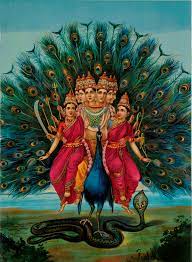
ORIGIN: Hindu (Epic and Puranic)
TYPE: God of war
KNOWN PERIOD OF WORSHIP: Circa 300 BCE or earlier until present.
SYNONYMS: Kumara; Karttikeya; Subrahmanya; and many other epithets.
CENTER(S) OF CULT: various
ART REFERENCES: Sculptures generally in bronze, but also in stone.
LITERARY SOURCES: Ramayana and Mahabharata epics; Puranic texts.
INFORMATION: Regarded as the leader of the divine army of gods. One of the sons of Siva, his birth is accounted in bizarre fashion. The gods persuaded Siva and Parvati to curb their incessant lovemaking. The vast quantity of unused semen then had to be disposed of. After shuttling it between fire (Agni) and water (Ganges), Brahma placed it on the mountain of the rising sun where, after ten millenia, it became Skanda.
His consorts include Kaumari (Devasena) adn Valli, and his sons are Sakha, Visakha and Niagameya. Perceived as virile and youthful, his name may signify the emission of semen. He is also seen as "one who jumps" while fighting and his sacred animals include the peacock and the cockerel, the latter being both aggressive and a jumper.
ATTRIBUTES: Banner, cockerel, hatchet, peacock feather and staff. He may also carry a wider assortment of objects and weapons. As Kartikkeya he is often depicted bearing six heads and twelve arms.